Risk-Stratified Monitoring After Image-Guided Intradiscal Procedures: A Narrative Review And Safety Framework for Interventional Pain Practice
Yonghyun Yoon, Jihyo Hwang, Dongyeun Sung, Jonghyeok Lee, Seungbeom Kim, Youngmo Kim, Jeimylo C de Castro, Teinny Suryadi, Anwar Suhaimi, King Hei Stanley Lam
Journal of Pain Research 2026:19 636396
Abstract
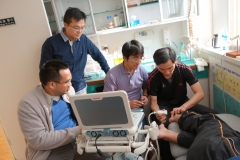
Background: Provocative discography and intradiscal procedures, including intradiscal electrothermal therapy, cooled radiofrequency biacuplasty, coblation-based nucleoplasty, intradiscal pulsed radiofrequency, platelet-rich plasma, stem cell-based injections, and oxygen-ozone therapy, are increasingly used as image-guided interventions for selected patients with discogenic pain. Ultrasound-guided intradiscal access, particularly in the cervical spine, may improve real-time visualization of adjacent neurovascular and visceral structures during needle advancement. However, successful needle placement does not eliminate delayed complications after disc puncture, energy delivery, chemical modulation, or biologic injection.
Objective: This narrative review synthesizes the mechanisms, clinical outcomes, complications, and temporal safety considerations of discography and intradiscal procedures and proposes a risk-stratified monitoring framework for image-guided pain practice.
Methods: Representative evidence was summarized for provocative discography, intradiscal electrothermal therapy, cooled radiofrequency intradiscal biacuplasty, coblation-based nucleoplasty, intradiscal pulsed radiofrequency, intradiscal biologic injections, oxygen-ozone therapy, and ultrasound-guided intradiscal access. Emphasis was placed on patient selection, procedural mechanisms, imaging guidance, reported outcomes, complication timing, and discharge readiness.
Results: Intradiscal procedures differ in diagnostic purpose, mechanism, tissue effect, evidence base, and risk profile. Higher-level evidence is available for selected thermal, biologic, and oxygen-ozone procedures, whereas ultrasound-guided cervical access and uncommon complications are supported mainly by small series, case reports, and technical notes. Early warning signs of neurologic injury, inflammatory flare, vascular injury, or hematoma may overlap with expected post-procedural pain; discitis more commonly becomes apparent after the initial observation window.
Conclusion: Monitoring should be individualized rather than determined by outpatient labeling alone. After uncomplicated single-level diagnostic discography without sedation, discharge after approximately 1– 2 hours may be considered when predefined recovery criteria are met. Multi-level procedures, sedation, cervical access, IDET or other thermal treatment, biologic or oxygen-ozone injection, technical difficulty, and patient-specific risk factors may justify structured observation for 6– 8 hours or longer, including pain-trajectory documentation, neurologic reassessment, ambulation and urinary-function confirmation, and delayed-complication education.
Keywords: discography, intradiscal procedure, discogenic pain, interventional pain, image-guided procedure, patient monitoring

Annual Scientific Meeting 2026
Date: 19 - 20 September 2026 (Saturday - Sunday)
Diploma of Musculoskeletal Medicine 2025 - 2027
Registration Deadline: 31 August 2025
Enquiry: hkimmltd@gmail.com